
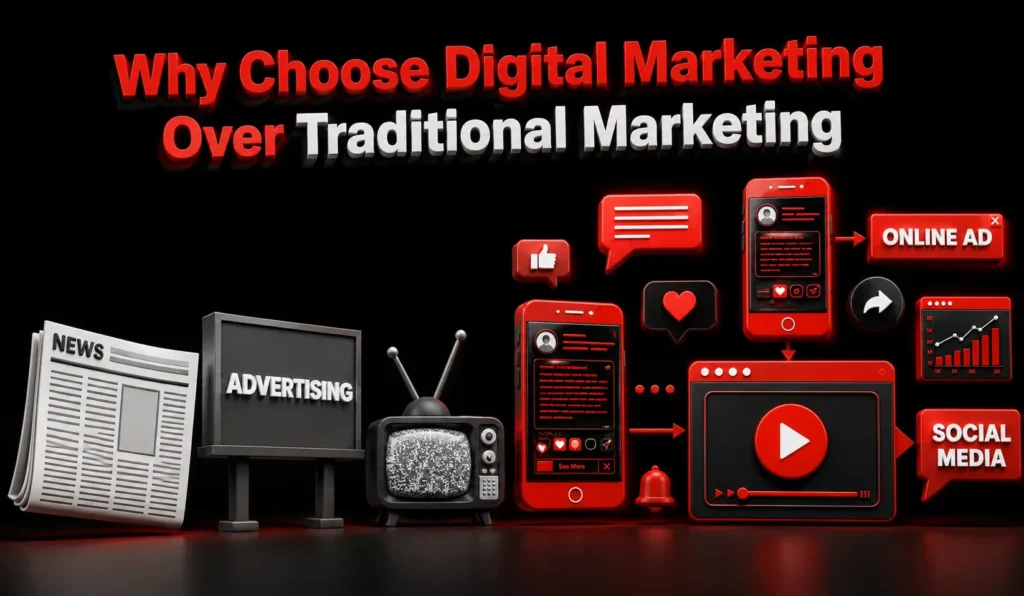
digital marketing vs traditional marketing
Every successful business relies on effective marketing to reach customers and achieve growth. No matter how good a product or service is, people need to know about it before they can become customers. For many years, businesses depended on traditional marketing methods such as newspapers, magazines, television commercials, radio advertisements, flyers, and billboards to reach their audience. These methods were effective during their time and helped many businesses grow.
However, the way people consume information has changed significantly over the years. Today, most people spend a large portion of their time online. They use search engines to find answers, browse social media for updates, watch videos, read reviews, and shop through websites and mobile applications. Because consumer behavior has shifted toward digital platforms, businesses have also had to adapt their marketing strategies.
This is where digital marketing has become an essential tool. It offers businesses new opportunities to reach customers, promote products, and build meaningful relationships. While traditional marketing still exists, digital marketing provides several advantages that make it a preferred choice for modern businesses
digital marketing vs traditional marketing
Reaching Customers Where They Spend Their Time
digital marketing vs traditional marketing
- One of the biggest reasons businesses choose digital marketing is because it allows them to connect with customers where they are most active. People no longer rely only on newspapers or television for information. Instead, they spend hours every day browsing websites, scrolling through social media feeds, watching online videos, and searching for products and services.
- By using digital marketing channels such as Google, Facebook, Instagram, LinkedIn, and YouTube, businesses can reach potential customers during their daily online activities.
More Affordable Than Traditional Marketing
digital marketing vs traditional marketing
- Marketing expenses are a major concern for many businesses, especially small businesses and startups. Conventional advertising techniques frequently demand a large financial commitment. Running a television advertisement, placing a billboard, or publishing a newspaper advertisement can be costly
- Digital marketing provides more budget-friendly alternatives. Businesses can choose strategies that fit their financial resources while still reaching a large audience. Whether it’s social media marketing, content creation, search engine optimization, or email marketing, digital marketing offers flexibility that traditional methods often cannot provide.
- This affordability allows businesses to invest their resources more efficiently and achieve better value from their marketing efforts.
Better Audience Targeting
digital marketing vs traditional marketing
- Traditional marketing often delivers messages to a broad audience without knowing who is actually interested in the product or service. As a result, businesses may spend money reaching people who have no intention of becoming customers.
- Digital marketing solves this problem by allowing businesses to focus on specific audiences. Marketing campaigns can be tailored based on location, age, interests, online behavior, and many other factors. This means businesses can communicate directly with people who are more likely to be interested in what they offer.
- When marketing messages reach the right audience, the chances of generating leads and sales increase significantly.
Easier to Measure Performance
digital marketing vs traditional marketing
- One challenge with traditional marketing is the difficulty of measuring results accurately. If a business places an advertisement in a newspaper, it may be hard to determine how many customers actually responded to that advertisement.
- Digital marketing provides detailed insights that help businesses understand how their campaigns are performing. Businesses can monitor website visits, user engagement, inquiries, conversions, and other important metrics. This information helps them identify successful strategies and improve areas that need adjustment.
- Having access to real-time data allows businesses to make informed decisions rather than relying on assumptions.
Stronger Customer Interaction
digital marketing vs traditional marketing
- Modern consumers appreciate businesses that listen and respond to their needs. Traditional marketing methods typically provide limited opportunities for interaction. A television advertisement or billboard delivers a message but does not encourage direct communication.
- Digital marketing creates opportunities for meaningful conversations. Through social media platforms, websites, emails, and messaging services, businesses can communicate directly with customers. They can answer questions, respond to feedback, and build stronger relationships.
- This interaction helps create trust and makes customers feel more connected to a brand.
Flexibility and Quick Adjustments
digital marketing vs traditional marketing
- Marketing trends and customer preferences can change quickly. Businesses need the ability to adapt when necessary.
- Digital marketing provides flexibility that traditional marketing often lacks. If a campaign is not performing as expected, businesses can modify content, update advertisements, adjust targeting settings, or change strategies within a short period.
- After they are published or broadcast, traditional marketing initiatives typically take more time and money to change. Digital marketing offers greater control and allows businesses to respond quickly to changing circumstances digital marketing vs traditional marketing
Building Brand Awareness
- Long-term company success depends on having a strong brand presence. Businesses can promote their brand consistently on various internet platforms with the aid of digital marketing
- Through regular content creation, social media activity, search engine visibility, and website optimization, businesses can increase recognition among potential customers. The more frequently people encounter a brand online, the more familiar it becomes.
- Over time, this familiarity can contribute to increased trust and customer loyalty.
Supporting Customer Research
- Before making a purchase, many consumers conduct research online. They compare products, read reviews, visit websites, and seek recommendations.
- Digital marketing helps businesses become part of this decision-making process. A well-designed website, informative blog content, positive reviews, and active social media profiles provide customers with the information they need.
- When businesses make it easy for customers to find accurate and useful information, they improve their chances of earning trust and generating sales.
Opportunities for Small Businesses
- In the past, larger companies often had an advantage because they could afford expensive advertising campaigns. Digital marketing has created opportunities for businesses of all sizes.
- Small businesses can compete effectively by focusing on targeted strategies and valuable content. With creativity and consistency, even a small company can build a strong online presence and attract customers.
- Digital marketing allows businesses to compete based on value and relevance rather than advertising budget alone.
Encouraging Long-Term Growth
- Successful marketing is not only about immediate sales. It is also about creating lasting relationships with customers and building a sustainable brand.
- Digital marketing supports long-term growth by helping businesses maintain regular communication with their audience. Through blogs, newsletters, social media content, andemailcampaigns, businesses can continue providing value even after a purchase has been made.
- This ongoing engagement encourages repeat business and strengthens customer relationships over time.
Adapting to Modern Consumer Behavior
- Consumer habits continue to evolve. Mobile devices, social media platforms, and online search engines have become important parts of everyday life.
- Businesses that embrace digital marketing are better positioned to meet customers where they are. They can provide convenient access to information, respond quickly to inquiries, and deliver personalized experiences.
- As technology continues to advance, digital marketing will remain an important tool for connecting with customers and supporting business growth.
Conclusion
- Both traditional marketing and digital marketing have their place in business promotion. However, the growing influence of the internet and digital technology has made digital marketing a more practical and effective choice for many businesses.
- Its ability to reach targeted audiences, provide measurable results, encourage customer engagement, support brand growth, and adapt to changing market conditions makes it a valuable investment. Whether a business is just starting out or looking to expand its reach, digital marketing offers opportunities that can contribute to long-term success.
- In a world where consumers increasingly rely on digital platforms for information and purchasing decisions, businesses that embrace digital marketing are better equipped to grow, compete, and build meaningful relationships with their audience.digital marketing vs traditional marketing
Digital marketing uses online platforms such as websites, search engines, social media, and email to reach customers, while traditional marketing relies on channels like television, radio, newspapers, magazines, and billboards.
digital marketing vs traditional marketing
Many businesses prefer digital marketing because it offers better audience targeting, measurable results, cost-effective campaigns, and wider reach.
digital marketing vs traditional marketing
Yes. Digital marketing provides flexible options that suit different budgets, making it accessible for both small businesses and large organizations.
digital marketing vs traditional marketing
Digital marketing can help businesses connect with audiences across different locations through online platforms, expanding their reach beyond local boundaries.
digital marketing vs traditional marketing
Businesses can target specific audiences based on factors such as location, interests, age, behavior, and demographics, helping them reach people who are more likely to be interested in their products or services.
digital marketing vs traditional marketing
FAQ Minting Listing Tokens Collection